
privacy concerns related to exchange for AI agents
As artificial intelligence (AI) continues to evolve and become more integrated into business and everyday applications, the concept of “exchange for AI agents” is gaining attention. This involves AI agents collaborating and sharing data, resources, and insights across decentralized networks, often to improve the efficiency and capabilities of AI systems. While this innovation offers numerous benefits, it also raises significant privacy concerns. As AI agents exchange sensitive data and knowledge, the risk of compromising privacy becomes a pressing issue that needs to be carefully managed.
One of the primary privacy concerns related to exchange for AI agents is the potential exposure of personal or sensitive information. In many AI applications, agents rely on vast amounts of data, including personal details, behavioral patterns, and transaction histories, to make decisions or provide recommendations. When these agents exchange such information with one another, there is a risk that sensitive data could be accessed by unauthorized parties or misused. For example, if AI agents from different sectors (such as healthcare, finance, and retail) share data with each other, there could be accidental leakage of personal information or unintended disclosure of confidential customer data. This raises questions about how personal data is safeguarded and whether proper encryption, access control, and data anonymization measures are in place during these exchanges.
Another concern is the potential for AI agents to unintentionally breach privacy due to the way they are trained or designed. Machine learning models, which power many AI agents, often require large datasets for training. These datasets may include personal or confidential information, which, when exchanged between agents, could inadvertently compromise privacy. If an AI agent trained on sensitive medical data exchanges its knowledge with another agent, it may inadvertently reveal patterns or characteristics tied to individual patients, even if that data was anonymized during the training process. This issue becomes more complicated when considering the complexity of AI models, which may unintentionally learn and expose sensitive details that humans may not be able to identify or control.
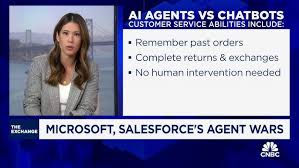
What are the privacy concerns related to exchange for AI agents?
The decentralized nature of exchange for AI agents further complicates privacy concerns. Since AI agents are often part of distributed networks, where they collaborate across different organizations and systems, ensuring consistent privacy standards across all participants becomes challenging. If the agents involved in the exchange operate under different privacy policies, regulatory frameworks, or security protocols, there may be inconsistencies in how privacy is managed and protected. For instance, one AI agent might follow stringent privacy regulations, such as the General Data Protection Regulation (GDPR), while another may not have the same level of compliance. This lack of uniformity could create vulnerabilities, leading to privacy violations or legal challenges for organizations using AI systems that exchange data.
Moreover, the scale at which exchange for AI agents operates can amplify privacy risks. With more agents involved in the exchange, the volume of data being shared increases, making it more difficult to track, monitor, and control. This can create an environment where privacy breaches may go undetected, as it becomes harder to identify which agents have accessed or shared specific data. As the network of AI agents grows, the complexity of managing privacy becomes even greater, potentially leading to unintended exposure of sensitive data over time.
To address these concerns, it is essential to implement robust privacy protection measures in systems that enable exchange for AI agents. This includes ensuring that data exchanges are encrypted, utilizing secure communication channels, and establishing strict access control mechanisms to limit who can access and share sensitive information. Additionally, organizations should focus on incorporating privacy by design, ensuring that AI agents are built with privacy safeguards in place from the outset. This may involve anonymizing data before it is exchanged, implementing differential privacy techniques to prevent the exposure of individual data points, and regularly auditing AI systems to ensure compliance with privacy regulations.
In conclusion, while the exchange for AI agents offers exciting opportunities for improving AI collaboration and efficiency, it also presents significant privacy concerns. These concerns center around the potential exposure of sensitive data, unintentional breaches due to the complexity of AI models, and the challenges of maintaining privacy standards in decentralized networks. To mitigate these risks, it is crucial for organizations to implement comprehensive privacy protection strategies, ensuring that AI systems can operate securely while safeguarding individuals’ privacy rights. Only with these protections in place can the full potential of exchange for AI agents be realized without compromising the privacy of users.

Leave a Reply